
Reactor: Functions, Specifications and Applications
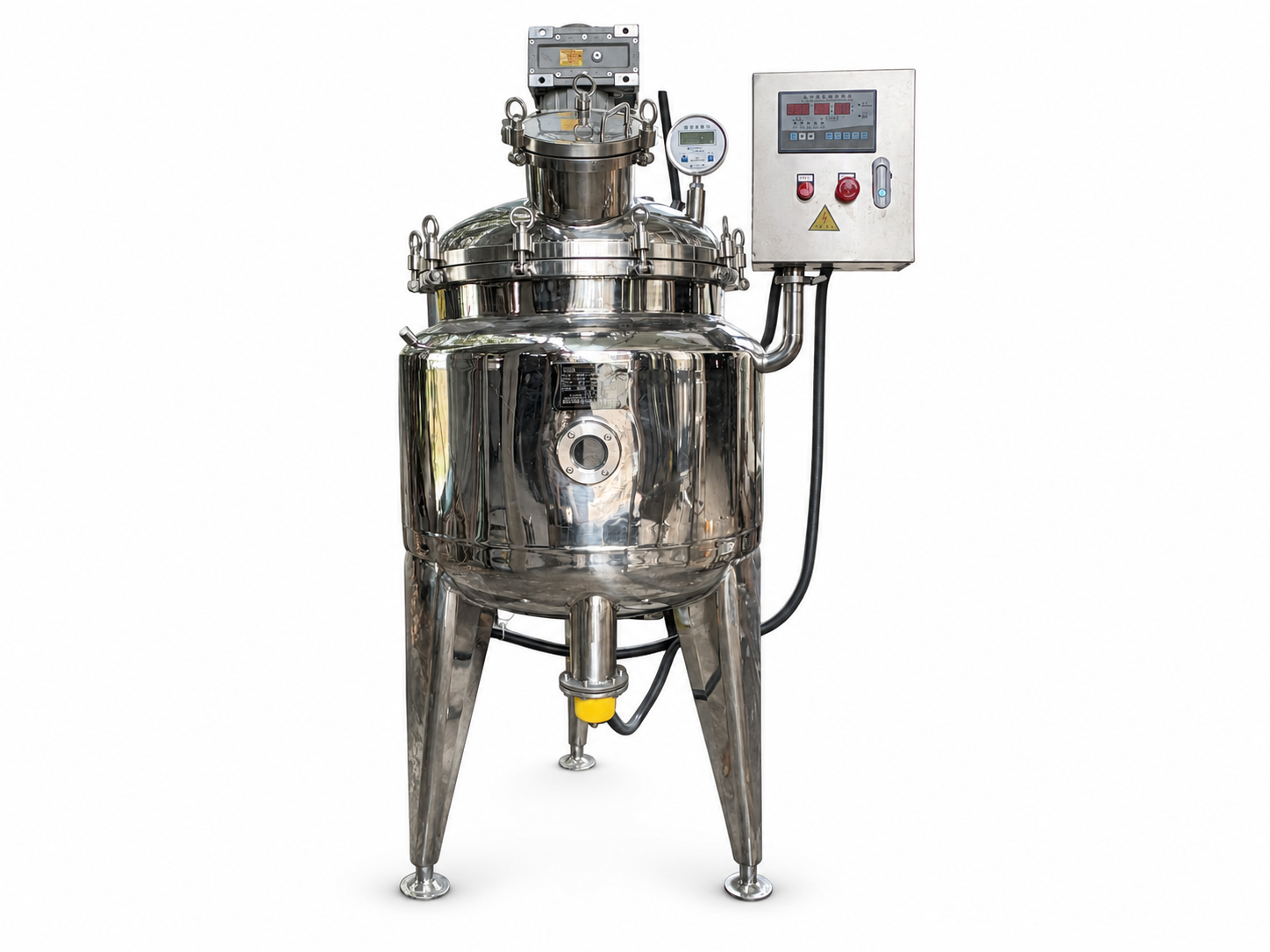
Processing functions
The stainless steel reactor is a core processing vessel widely used in food, pharmaceutical, cosmetic and chemical industries. It integrates heating, cooling, stirring, mixing and reaction functions in one unit. Equipped with variable-frequency stirring system and sealed structure, the reactor realizes constant-temperature reaction, emulsification, mixing and material synthesis under vacuum or normal pressure. All contact parts adopt SS304/SS316L stainless steel, featuring anti-corrosion, high temperature resistance and easy cleaning. Customized volume, pressure and heating methods are available to meet different production requirements.
Reading the technical specifications
Begin with capacity, material and operating conditions. Then compare the drive, heating and control specifications against the intended process. The following values come from CHENY’s product documentation.
| Material | SS304 / SS316L Stainless Steel |
|---|---|
| Volume Range | 50L - 5000L (Customized) |
| Working Pressure | Normal Pressure / 0.1-0.6MPa |
| Working Temperature | 0℃ - 180℃ |
| Stirring Power | Customized According to Volume |
| Stirring Speed | 0-600r/min (Frequency Conversion Speed Regulation) |
| Heating Method | Electric Heating / Steam Heating / Water Bath Heating |
| Sealing Type | Mechanical Seal, Full Vacuum Sealing |
| Surface Treatment | Mirror Polishing Inside and Outside (Ra≤0.8μm) |
| Application | Chemical Reaction, Material Synthesis, High-viscosity Mixing |
Preparing an equipment inquiry
Describe your material, batch volume, temperature, pressure and available utilities. Include the intended mixing, emulsification, extraction or concentration step so the equipment requirements can be discussed together.